Rabbi Yitzhak Finger EnglishFri, Apr 17 7:27 AM
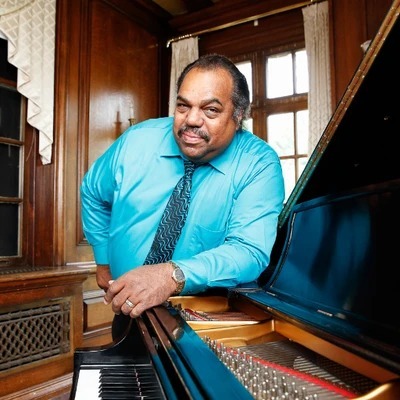
In 1983, Daryl Davis, a Black blues pianist, finished a successful set at a bar in Frederick, Maryland. A white man approached him, visibly excited, and said: "This is the first time I've ever heard a Black man play piano like Jerry Lee Lewis." The two sat down for a drink together. During the conversation, the man confessed: *"I've never had a drink with a Black man before."* When Daryl asked why, the man pulled out his membership card in the Ku Klux Klan. Daryl didn't flinch. He didn't back away. He simply looked at the man — and thought about the question that had stayed with him since age ten, when he first encountered violent racism: How can you hate me if you don't even know me? Daryl decided to pursue what seemed like an impossible mission. He arranged a meeting with Roger Kelly, who held the highest rank in the organization. Kelly arrived at the hotel room with an armed bodyguard, expecting to meet an enemy. Instead, he found a calm, curious, and respectful Black man sitting across from him. In the middle of the tense conversation, a strange and startling noise suddenly filled the room. *Both men jumped to their feet, each convinced the other was about to attack.* Within seconds, the source became clear: a block of ice melting in a bucket had shifted and made a loud thud. In the wave of relief, both men burst out laughing. In that one moment, Kelly's armor cracked. He no longer saw a threat sitting across from him — he saw a human being, someone who had just shared with him a moment of fear and relief. *The relationship continued for years.* Daryl kept listening, kept asking questions, and kept revealing his humanity to Kelly — without ever lecturing or moralizing. The ending was remarkable: Roger Kelly didn't just leave the organization. He shut down his entire chapter. In a gesture that was both symbolic and powerful, he handed Daryl his white robes and hood. Kelly became one of over 200 KKK members who left the organization because of Daryl's approach. This week's parsha brings the metzora — a person who sinned (primarily through lashon hara) before the Kohen. *The Kohen in Judaism embodies chesed, the quality of Aharon HaKohen:* one who loves peace and pursues peace, who loves people and draws them close to Torah. Darkness cannot drive out darkness — only light can do that. Hatred cannot drive out hatred — only love can. *When we want to correct, to heal, we have to learn to listen.* Listening is not agreement. But it is the shortest path to the heart of someone who thinks differently. Shabbat Shalom. Chodesh Tov H'Rav Yitzchak Fanger
In Kansas City lived Billy Ray Harris — a homeless man who spent his days on the street with a small plastic cup, waiting on the kindness of passersby. One afternoon, Sarah Darling happened to pass by. She stopped, pulled a few coins from her purse, and poured them into his cup, then continued on her way — not noticing that along with the coins- *Her engagement ring had slipped from her finger and fallen in as well.* It was a valuable ring, set with a diamond. When Billy Ray emptied his cup, he discovered the "treasure." He later admitted that he had considered selling it. He even went to a jeweler who offered him $4,000 cash on the spot. For a man with no roof over his head, that was a sum that could have changed his life. *"But my grandfather taught me that you always have to do the right thing,* " he later said. The next day, Sarah — who had discovered her loss and was beside herself with despair — returned to the street corner where she had last seen Billy. She approached him and asked in a trembling voice: *"Maybe you remember me? I think I lost something very valuable here..."* Billy Ray didn't let her finish the sentence. "Is this your ring?" he asked, and pulled it from his pocket. Sarah burst into tears of relief and gratitude. Sarah and her husband Bill decided that a simple thank-you wasn't enough. They opened a small fundraising page online, intending to raise a few hundred dollars to help Billy "get back on his feet." But the gratitude didn't stop there. *The story spread around the world, and people donated in droves.* Within a few months, more than $175,000 had been raised for Billy Ray Harris. But the truest kindness came in the wake of the publicity. Billy's family — who hadn't seen him in 16 years and had assumed he was no longer alive — recognized him on screen. *His sisters reached out immediately, and Billy Ray gained not only a new home and a car, but an emotional reunion with his family.* In this week's parshah, a person brings a Korban Todah — a thanksgiving offering — for a great act of kindness that Hashem performed for him. But an equally important perspective is this: *To give thanks and to rejoice not only when something was lost and returned to you, but for the fact that it was never lost in the first place — isn't that even better?* Who knows from how many misfortunes, hardships, and illnesses the Creator of the world saves us, as Chazal say in the Gemara: "Ein ba'al hanes makir b'niso" — the one who experiences a miracle does not recognize his miracle. *Why wait for something to happen and only then give thanks*? Gratitude is not merely a result of happiness — it is the path to it. Shabbat Shalom. H'Rav Yitzchak Fanger
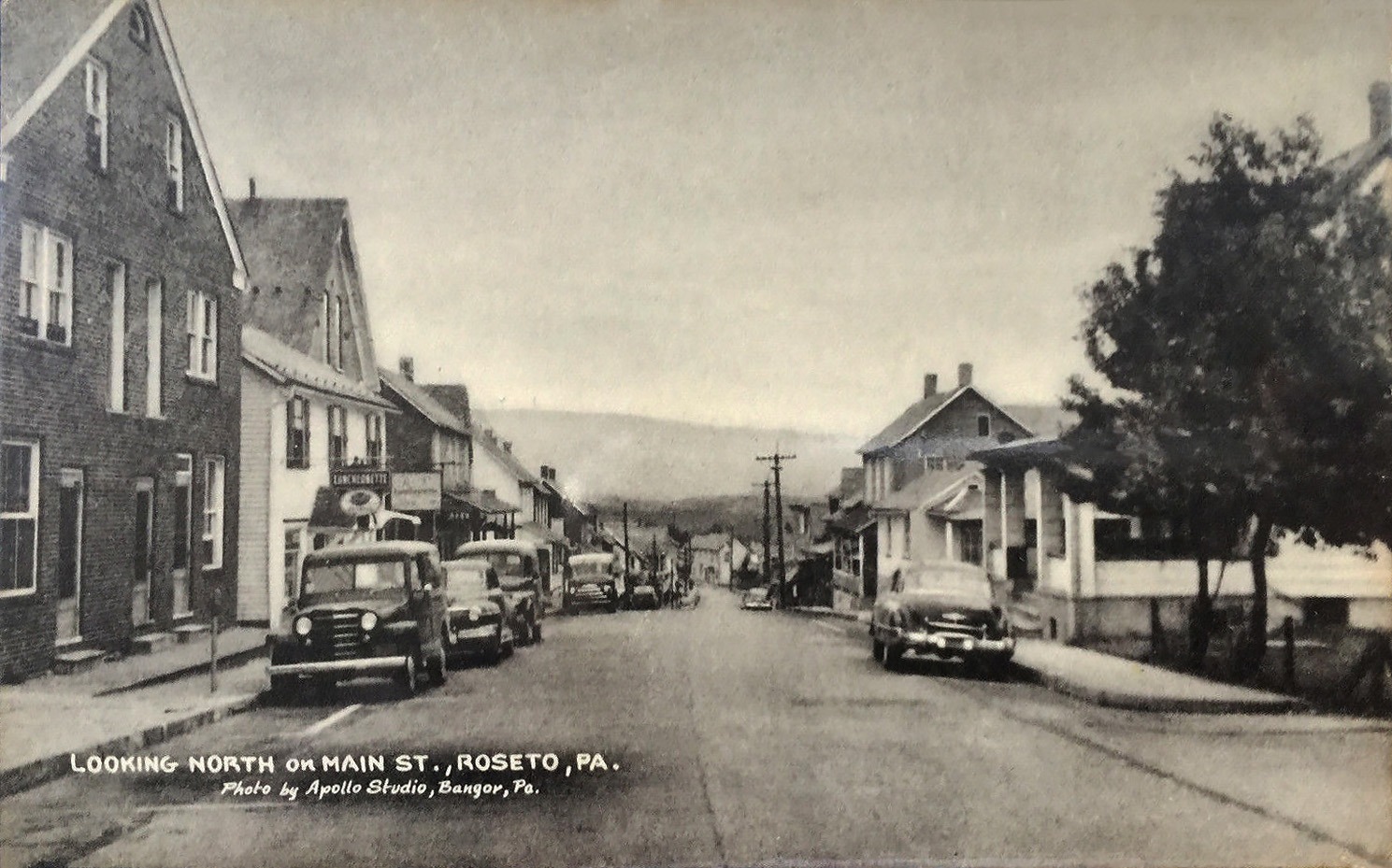
In the early 1960s, Dr. Stuart Wolf, a physician and head of the Department of Medicine at the University of Oklahoma, found himself in a casual conversation with a local doctor from Pennsylvania. *The doctor dropped a research bombshell:* "You know," he said, "I treat patients from all across the region, but I almost never see anyone from the town of Roseto under the age of 65 with heart disease." *Wolf was stunned.* At the time, heart attacks were the leading cause of death in the United States — a full-blown epidemic among young men. He decided to investigate. Wolf, together with sociologist John Bruhn, launched a comprehensive study. At first, they looked for answers in biology. Could it be a Mediterranean diet? No. The residents of Roseto were eating enormous amounts of pizza, pasta, and meatballs, and many struggled with obesity. Genetics? They examined relatives of Roseto residents who were living in other American cities — and found that those relatives suffered from heart disease at the standard, elevated rate. Perhaps it was the geography? In the neighboring town of Bangor, the rate of heart disease was three times higher. Physical activity? Many were miners, but also heavy smokers. Nothing explained the phenomenon. *They came to realize that the answer wasn't on the plate or in the genes — it was in the street.* Roseto was a town of immigrants who had all come from the same village in Italy (Roseto Valfortore). A community where social isolation simply did not exist. The elderly were respected by the young. People stopped each other on the street to talk, cooked for one another, and celebrated together in small community clubs. The wealthy didn't flaunt what they had, and the poor never felt abandoned. A deep social equality prevailed. *Wolf predicted that the moment Roseto's residents adopted the individualistic American way of life, the miracle would disappear.* He was right. By the 1970s and 80s, as young people began building homes with high fences and retreating into more isolated lives, heart disease rates in Roseto surged — and matched the rest of the country. In this week's parsha, there is a commandment: "וְכִי יָמוּךְ אָחִיךָ וּמָטָה יָדוֹ עִמָּךְ וְהֶחֱזַקְתָּ בּוֹ" — *"And if your brother becomes impoverished and his means falter beside you, you shall strengthen him."* Rashi explains: do not wait for him to fall completely and become impossible to lift — strengthen him at the very first signs of decline. Everyone will show up when someone close to them faces a heart attack. Let us show up before that — so we never have to. *The strength of a community is not measured by how fast the strong can run, but by their willingness to stop and reach out to those who have stumbled.* Shabbat Shalom. H'Rav Yitzchak Fanger
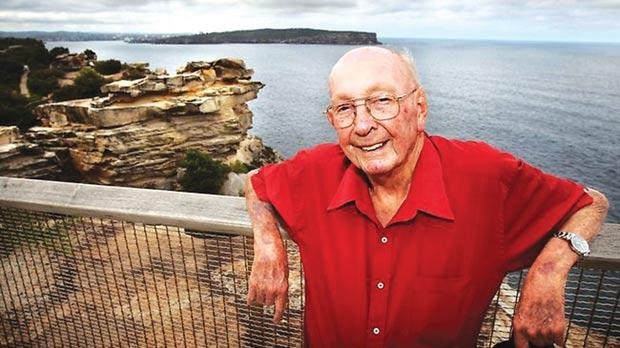
On the outskirts of Sydney, Australia, stands a towering cliff called "The Gap." It is a place of breathtaking beauty, where the Pacific Ocean meets enormous rocks. *But for many years, it became infamous as one of the world's most prominent suicide sites.* In 1964, a man named Don Ritchie moved into a modest home directly across the road from the cliff. For 45 years, Don kept an extraordinary routine. *Every morning he would wake up, walk to the window, and look out toward the cliff.* When he noticed someone standing too close to the edge — or someone who looked lost and in pain — he didn't call the police and wait at a distance. He simply walked out of his house and crossed the road. He would approach the person, keeping a respectful distance, offer his famous smile, and say the words that became his trademark: "Hello, I'm Don. I live just across the way. Is there anything I can do to help? Maybe you'd like to come over for a cup of tea or coffee?" *Many of them did exactly that.* They walked with him to the house across the road, sat in his kitchen, drank tea, and talked. Some sent him postcards and thank-you letters many years later. The official documented figure is that Don Ritchie saved 160 lives. But his family and members of the community believe the true number is closer to 500. Don Ritchie passed away in 2012, at the age of 85. He was known as *"The Angel of the Gap."* Before his death, when asked why he did it, he answered simply: "Never underestimate the power of a warm smile and a kind word. *You never know how much the person in front of you needs them at that moment."* In this week's parsha, it says: "Se'u et rosh kol adat Bnei Yisrael… tifkidu (count) otam l'tzivotam" — "Take a count of the entire congregation of the Children of Israel… count them by their legions." It is brought down in sefarim that the purpose of counting Bnei Yisrael was to show every single person that they are a davar shebeminyan — something significant that is counted, something that cannot be nullified even among thousands. Every person has their own individual importance before the Ribono Shel Olam. Don Ritchie proved it at the edge of a cliff: when someone counts you, you remember that you exist. Despair is a closed circle — but chesed is the line that breaks it open. *Look around you. Someone nearby might need your smile. Sometimes, that someone is you.* Shabbat Shalom. Chodesh Tov Rav Yitzchak Fanger
Jack Ma was not born a genius, nor was he marked as a promising talent. Even in his childhood, in a small town in China, he failed his elementary school final exams twice, and failed the entrance exams for middle school three times. When he wanted to attend university, he failed the entrance exams three consecutive times before finally managing to gain acceptance to a local teachers' college. *He also dreamed big and applied to the prestigious Harvard University no fewer than ten times*. The answer he received each time was the same: a rejection letter. But his real test came in the job market. Ma applied for 30 different positions and was rejected from every single one. When he tried to join the police force alongside four other candidates, all four were accepted — and he was the only one turned away, on the grounds that he was "simply not good enough." When KFC opened its first branch in his city, 24 people came in for job interviews. 23 of them were hired. Only one person was left out — Jack Ma. *Most people would have broken at that point, surrendering to self-criticism and concluding that they were a complete failure.* But Jack Ma refused to be swept into sadness and despair. In 1995, he traveled to the United States and was exposed to the internet for the first time. He typed the simple word "beer" into a search bar and discovered that there was not a single result connected to China. In that moment, everything clicked. Even though he had no background in computers whatsoever, and did not know how to write a single line of code, he returned to China, gathered 17 of his friends in his small, cramped apartment, and convinced them to believe in the wild vision of a virtual marketplace. *Today, Alibaba is one of the most powerful companies in the world, and the rest is history.* In the lead-up to Shavuos, the Chachamim note that there are three crowns — the crown of Kehunah, the crown of Malchus, and the crown of Torah. The crown of Kehunah — if you are not among the sons of Aharon HaKohen, you have no way of attaining it. The same applies to the crown of Malchus — if a person is not of the lineage of Beis David, he cannot be king. But the crown of Torah is not so; rather, whoever wishes to take it, let him come and take it (Avos d'Rebbi Nosson, chapter 40). And the emphasis is — whoever wishes. *The single condition for success in Torah, and in life, is the will.* Don't lose it. No matter how many times you've tried, no matter how many times you've been told "no" — every "no" is just another step toward the greatest "yes" you're meant to reach. Chag Sameach. Shabbat Shalom H'Rav Yitzchak Fanger

A father and his son went out to fly a kite on a beautiful day. The boy watched it soar, then turned to his father with a question: " *Why does the kite need a string* ? It's only holding it back from going higher!" His father smiled and, without a word, let go. The kite climbed — higher and higher — but before long it began to drift, then tumble, and finally fall to the ground. The child looked on, deeply disappointed. His father knelt beside him and said, "My dear son, in life we reach a certain point where we feel that there are things that don't allow us to fly higher — like family, children, marriage, religion, and so on. We feel that we want to free ourselves from these ties, because we think they are limiting us from reaching greater heights. But remember, my son — reaching great heights is easier than staying there. And family, religion, and so on — they help a person stay at that height. If we try to break free, we will ultimately fall, just like the kite." This week's parasha contains a verse that sheds light on the path to spiritual achievement in particular, and achievement in general. It is written: "In a vision I make Myself known to him" (Bamidbar 12:6). H'shem reveals Himself to the Navi through a vision... The Rebbe of Kazmir zt"l teaches: " *The essence of attaining closeness to H'shem comes specifically through obstacles and hindrances* — just like a mirror, which is formed by the coating that blocks the back of the glass" (Maamar Yechezkel, Parashat Beha'alotecha). *Just as what turns a piece of glass into a mirror is the silver coating on its back, so too in our avodas H'shem,* It is precisely the things that block us that allow us to reach what we are truly after. The way an exam is what gets you into the program. The way a weight is what builds the muscle. The challenges and obstacles in our lives were never meant to stop us — they are there to test us, to ask us: how much do you really want this? There will be hard times in marriage, at work, in our ruchniyus. It will feel like these things are holding us back, tying us down. But the truth is they are teaching us, sharpening us, and bringing us closer to where we are truly meant to be. *Be strong. Don't look to escape — seek to grow* . Shabbat Shalom. H'Rav Yitzchak Fanger

In the late 1980s, an extraordinary structure was built in Arizona: "Biosphere 2" — a massive, sealed glass dome containing entire worlds within it. *A rainforest, a small ocean with a coral reef, wetlands, a savanna, and a desert.* The idea was to create a controlled world where scientists could study how Earth's living systems function without ever stepping outside. Inside the dome, among other things, they planted trees. At first, everything seemed to be progressing beautifully — the trees inside the Biosphere grew quickly, even faster than their counterparts in the open wild 🌴. But then a strange problem emerged: before the trees reached maturity, many of them began to topple and lose branches 🍃. *They simply could not bear their own weight.* This is where a fascinating and well-known biological principle enters the picture: trees need wind in order to grow strong. When wind sways a tree again and again, the tree "senses" the bending and tension, and in response changes the way it grows — it grows slightly shorter but thicker, develops a stronger trunk, and sends its roots deeper into the earth. This is one of the reasons trees in nature are able to withstand storms for years 🌫️. *Inside the Biosphere, in the still, windless air, the trees never received that shaking — and so they grew quickly, yet remained soft and brittle.* The Biosphere itself was far from perfect; it ran into countless problems, from oxygen levels that plummeted to species that went extinct within it 🚫. But it is the trees that left behind one image that is hard to forget: a structure that grows in complete protection, without any resistance, may appear impressive and fast-growing — and yet remain weak on the inside ⚡️ . The Chiddushei HaRim teaches that the deep reason behind the Meraglim's fear of entering Eretz Yisrael was that in the desert, Klal Yisrael had been living inside a spiritual greenhouse. The Ananei Kavod surrounding them, the man falling from the heavens, water rising from the Be'er, Moshe Rabbeinu always present, and so on. *Entering the Land would demand from them confrontations that might shake them spiritually.* And so they spoke ill of the Land — hoping, perhaps, to remain in the desert. Of course, every one of us would prefer to stay in the "greenhouse." But the Borei Olam challenges each of us to step out of our comfort zone — whether that means getting married, going to work, changing careers, and so on. *Be strong* Not because there are no winds, but because of them. Every storm that bends you is quietly building the roots that will hold you standing upright for years to come. Shabbat Shalom 🌹 Harav Yitzchak Fanger 🤍

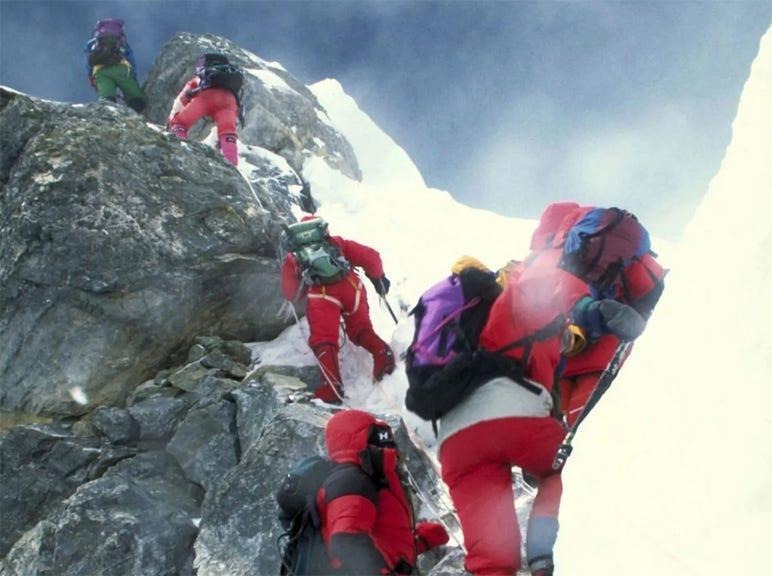
On May 10, 1996, two commercial expeditions — led by seasoned climbers Rob Hall and Scott Fischer — set out to summit Mount Everest. *At altitudes above 8,000 meters, in what mountaineers call the "Death Zone, "* Oxygen is scarce and time is brutally limited. For this reason, an ironclad rule had been established: the Turnaround Time. *The agreement was non-negotiable — at 2:00 PM, you turn around and begin your descent, even if the summit is only meters away.* Anyone who fails to descend on time risks being caught in the deadly afternoon storms that sweep the mountain without warning. But the climb fell behind schedule. A human traffic jam formed on the route to the summit. Two o'clock came and went, and the vast majority of climbers were still pushing upward. Under the crushing pressure to succeed, no one made the call to stop and turn back. The climbers kept pulling themselves higher. Doug Hansen, one of Rob Hall's clients, reached the summit only around 4:00 PM — two full hours past the turnaround time. Scott Fischer, suffering from extreme exhaustion, arrived late as well. Then, around 3:30 PM, the sky changed. A massive blizzard swallowed the mountain whole. Visibility dropped to zero, temperatures plummeted to minus 40, and violent winds lashing at 100 kilometers per hour whipped the climbers trapped in the Death Zone — without oxygen, without shelter, without any ability to navigate. *The mountain collected its price. Scott Fischer collapsed and died on the descent.* Higher up, Rob Hall refused to abandon his fallen client. The client died through the night, and by morning, after a final farewell radio call to his wife, Hall's voice went silent too. Other climbers wandered through the whiteout for hours. By the end of that single day, the summit had become a death trap — eight climbers lost their lives in a disaster that could have been prevented had they simply turned back at 2:00 PM. *Sometimes, you have to know when to stop* . In this week's Torah portion, Korach goes to war to reach the summit. In his own mind, he was convinced he was right. In his own mind, he even managed to persuade 250 heads of the Sanhedrin to believe in his cause. But sometimes the most dangerous enemy a person faces is not Everest, not another human being — it is the inner distortion that clouds his vision. *Sometimes the most treacherous summit is not the one on the mountain, but the one inside a person's ego*. There comes a moment when stubborn persistence is no longer courage — it is blindness dressed up as principle. The disaster doesn't begin when a person fails. *It begins when he is no longer capable of admitting that he needs to turn back.* Shabbat Shalom Rav Yitzchak Fanger
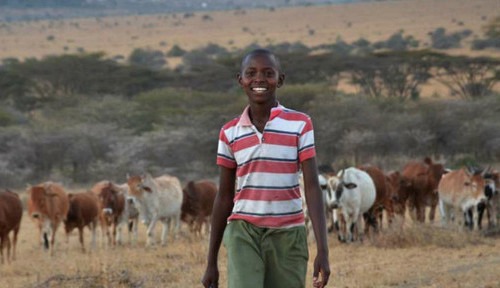
Richard Turere was a boy from Kenya who grew up near Nairobi National Park. By the age of nine, he already carried a heavy responsibility: guarding his father's cattle. *For his family, the cows weren't just property — they were a source of life, livelihood, and security*. At night, danger was constant. Lions that wandered out of the park would approach the enclosures and prey on the cattle. Each time it happened, the family lost another piece of its future. In the world Richard grew up in, the accepted solution was simple and painful: if the lions kill the cattle, you kill the lions. But Richard wasn't quick to choose that path. He started observing instead. He tried lighting fires near the enclosure, but the lions got used to it. He tried setting up scarecrows, and that too worked only for a short while — the lions were too smart, and they figured out there was no real person there. Then, one night, he noticed something small: when he himself walked around the enclosure carrying a flashlight, the lions kept their distance. It wasn't the light that frightened them — it was the movement. A moving light told them a person was nearby. Out of that simple observation, a remarkable invention was born. Richard took LED bulbs, a battery, wires, and spare parts he found lying around, and wired together a system of lights around the enclosure. The lights flickered on and off in sequence, as if someone were walking around the cattle with a flashlight all night long. *And the lions stopped coming.* The neighbors saw it and asked for the same. That's how the solution of one nine-year-old boy grew into a project called Lion Lights, which spread across Kenya and into other countries in Africa. Richard didn't defeat the lions by force. He simply learned their language, and spoke to them in light. In this week's parsha, Moshe Rabbeinu is commanded to speak to the rock — in contrast to an event that had taken place forty years earlier, when Moshe Rabbeinu was commanded to strike the rock, and water flowed from it then, too. We need to learn from this that there are periods when leadership through "striking" is no longer the way. We need to learn to speak. *There are souls that look like a rock: hard, closed off, unresponsive.* But H'shem says: don't strike. Speak. Inside the rock, there is water; inside the closed-off person, there is an inner point waiting for the right word. Striking can break the rock from the outside, but speech can draw water out of it from within. But anyone who wants to draw water from a "rock" has to believe the water is there before it ever emerges. *Richard, one boy from Kenya, proved that even with lions, light can do what force can't*. Shabbat Shalom. Harav Yitzchak Fanger
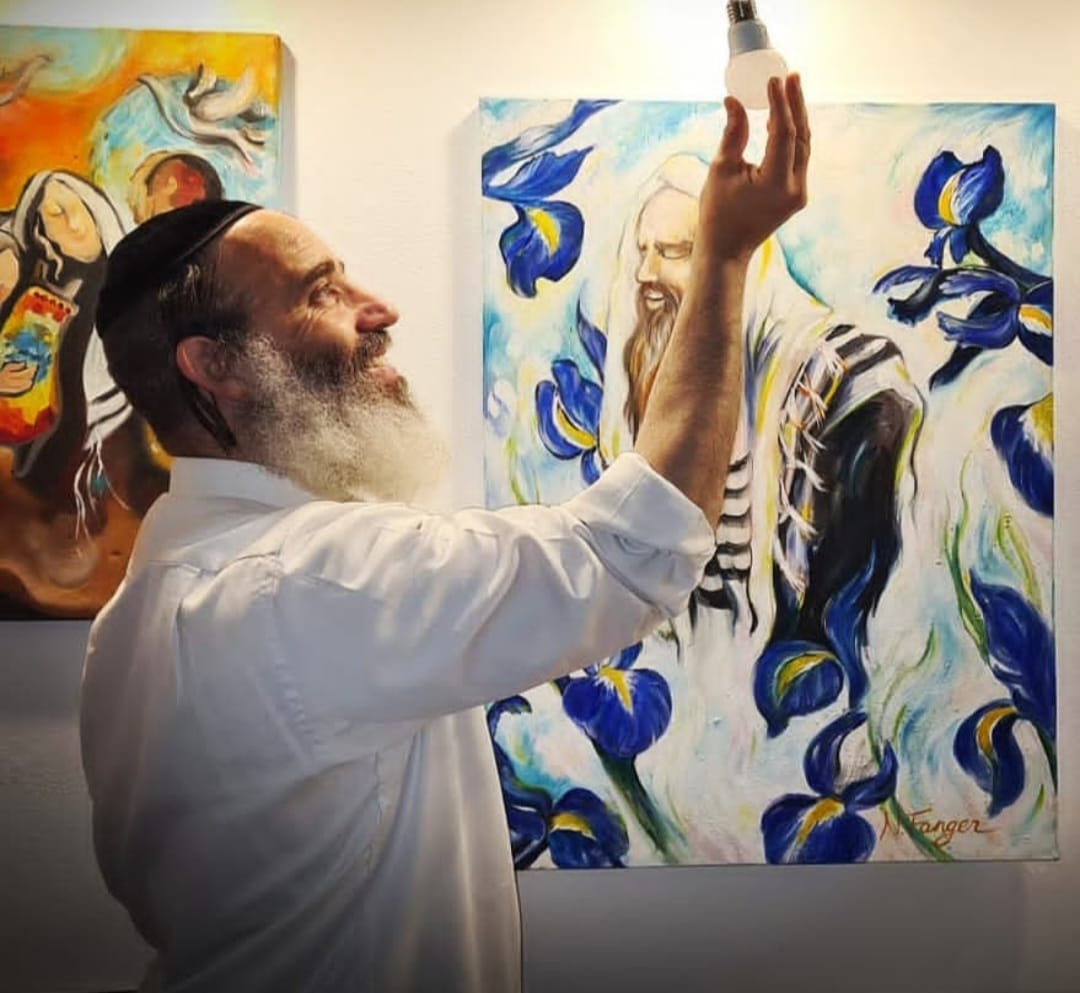
Phil Hansen was a young, gifted artist who had found something rare — his own unique voice. *He studied art and specialized in pointillism — painting built from thousands of tiny dots* . Each dot had to be precise, steady, placed just right. The hand had to be still, the eye focused, the heart patient. *But the very hand that was his instrument began to tremble*. At first it was a small movement. A dot that didn't come out round. Then the tremor grew stronger. The dots became tiny, shaking lines. Phil tried to fight it. He gripped the pen harder, pressed more, pushed himself further. But the harder he fought, the more his hand ached — and the worse the tremor became. Finally, a doctor told him the damage to his hand was likely permanent. *For him, it was a curse.* The thing he loved most had been taken from him. His language as an artist had been silenced. He hadn't only lost a technique; he had lost part of his identity. If I can no longer draw the way I once did, he thought, perhaps I am no longer an artist. And then the doctor said something — seemingly offhand, yet the kind of thing that changes a life: *"Why not embrace the tremor?"* At first, Phil was angry. "How can I embrace what destroyed my career?" But there are things in life that cannot be changed — and when that is the case, we have to learn to change our relationship to them. Instead of fighting his hand, Phil began to work with it. If the hand produces shaking lines — let the lines become part of the painting. If perfect dots are no longer possible — create a different kind of art. If there is a limitation — turn it into a creative framework. And so what had appeared to be the end of the road became a new beginning. *Phil went on to create extraordinary work specifically from within constraints: from unconventional materials, in unexpected ways, under rules that forced him to think differently.* In this week's parasha, Bilaam came to curse — and *H'shem turned the curse into a blessing.* Sometimes in our own lives there is a "curse": pain, weakness, trembling, a loss of direction. *But inside the very thing that looks like an obstacle, a new blessing can be hiding.* The blessing is not always that reality returns to the way it once was. Sometimes the blessing is that we discover within ourselves a strength, a creativity, and a faith that could never have been born without the tremor. *When a person stops fighting what cannot be changed, they begin to discover what can be built.* Shabbat Shalom. Rav Yitzchak Fanger