Toras AvigdorFri, May 29 2:16 AM
*Toras Avigdor Weekly Shabbat booklet *-Junior Edition* 👇👇👇
*Toras Avigdor Weekly Shabbat booklet *-Junior Edition* 👇👇👇
*Why were the Amaleiki nation, worthy to have geirim as their descendants? The Gemara says that the descendants of Haman were in the yeshivos.* And the answer is, Hakadosh Baruch Hu wants to demonstrate the inherent greatness in human beings. "Mayim amukim eitzah b'lev ish" — there are deep waters of counsel and wisdom in every man's heart. Every human being is capable of endless greatness. When Hakadosh Baruch Hu breathed into humans His breath — the breath of life, that's a soul — He breathed it from Himself, which means endless nobility and wisdom were breathed into the human breast by Hashem. It's waiting. And even Haman, had he become a baal teshuvah, Haman could have become a Rosh Yeshivah. Imagine Haman becoming a Rosh Yeshivah. He could have become a tzaddik hador. Everybody, up to a certain stage, has free will. Haman probably was deprived of his free will after he passed a certain point. But his grandchildren, his great-grandchildren, weren't deprived. Now although, had our nation been able to fulfill the command of "Mocheh Timcheh" to wipe out the Amaleikim, then nobody would have remained to become Geirie Tzedek. That's all right too, but Hakadosh Baruch Hu gave that sentence: they should wipe them out. But since they didn't, so those who survived still have a chance. Now although I don't like the German people, and I still say that six million Germans minimum should be executed even today. Without hesitation I say that. Six million Germans have to be shot, minimum, to make up for what happened. And don't tell me it's not fair, because there are many of them still alive. Even as youths, they broke the teeth in the mouths of Jews, boys on the street attacked Jews and beat them up. Very many of them have blood on their hands. So six million minimum. And nevertheless, if a German becomes a Ger tzedek and he acts according to the Torah, we have the greatest respect for him, and he could become a Gadol ba'Torah. I know such a case. A son of a German ger, who's a tzaddik gamur. A tzaddik gamur. Because every man possesses endless greatness within his capabilities. (June 1982) *Rav Miller on the Parsha* _The following Dvar Torah is taken from "Journey into Greatness"_ וישמרך (נשא ו:כד) AND SHALL GUARD YOU (Nasso 6:24) This is the first of all the blessings: that Hashem protect us from misfortunes. The list of ailments to which the human body is subject is almost endless, and the hardships caused by floods or droughts or fires or locusts or mildew or other vicissitudes of nature are too numerous to be counted. The terrors of war and invasion, of bandits and evildoers of every description, as well as the suffering caused by evil rulers or by personal enemies or by family dissensions, fill the chronicles of Mankind. The great fundamental blessing is therefore: "He shall guard you". Even without the following blessings, this alone is of the greatest urgency for all men. *Click below to join the Official Toras Avigdor WhatsApp Group.* http://tiny.cc/TAenglish5
*Rav Avigdor Miller on When to March at The Parade* *Q:* Is there any reason we should consider participating in the parade this coming Sunday, the Solidarity Parade for Soviet Jewry? *A:* We should follow one rule. Whether something is right or wrong is not for us to decide. We are a nation that lives according to the Gedolei Yisroel. We have great Torah leaders! Why is it that every Chaim Yankel thinks that he can make decisions for the Jewish nation?! Any boy! Any little yingel! We can’t allow that! Therefore, if there would be a kol korei, a proclamation signed by Rav Moshe Feinstein that said “Go to the Solidarity Day Parade,” then you don’t even need any reasons, you just go. But if his name is not signed there, or the Satmerer Rav’s name, or the Bobover Rav. Somebody! Something! Just because a district attorney signs there, you go and march in a parade of yingiluch?! And therefore, we should do only what our Torah leaders tell us to do. I don’t care what kind of a day parade it is. If the gedolim tell us to march out in the street for this and this purpose, then it’s your duty to do it. Otherwise, you stay at home. March 1975 *Click below to join the Official Toras Avigdor WhatsApp Group.* http://tiny.cc/TAenglish5
*Rav Avigdor Miller on the Hard-Working Kollel Man* *Q:* If a man is learning in the kollel, isn’t he transgressing the commandment בזעת אפך תאכל לחם — that with the sweat of your brow you should eat bread? *A:* And the answer is, he is sweating plenty. If a man works at a job but he is a loafer, isn't he loafing? The mere fact that you are nominally employed, does it mean that you are sweating for your living? Plenty of people are sitting in their offices and loafing. They are deceiving their employers; they are getting paid for nothing. So if a man is in a kollel and he is really learning, so he is a servant of Hashem and he is doing important services for the Am Yisroel. And that's בזעת אפך תאכל לחם; the world has to support him. And he deserves support even more than a man who works. Now those people who sit in a kollel and come in let's say 10 o'clock in the morning, while their wives go, half past eight, or half past six, to go to work for them, and this loafer comes 10 o'clock after reading the entire newspaper at breakfast, that's not a kollel man. He’s like any faker who sits at his job and doesn’t do the work. But if he comes early to the kollel and he is there all the time and works hard—you won't see him standing on the street in front of the yeshiva in the middle of seder—he is inside laboring over the Gemara, so he is a hard worker. Like one rosh yeshiva said, אגירא דיומא אנן – “We are hired workers by the day. We are being paid for our work.” January 1986 *Click below to join the Official Toras Avigdor WhatsApp Group:* http://tiny.cc/TAenglish5

*Rav Avigdor Miller on Who Can Recognize a Gadol* *Q:* How can we recognize if a man is a gadol hador, one of the great Torah leaders who we must follow? *A:* The answer is how can you know who is a good doctor? You ask the ladies on the block? No. You ask your local doctor. The local physicians will tell you, go to this man. You have nobody else to rely on. Whether he knows or not, you have to obey him. So you ask physicians and they tell you. If you want to know who is a gadol baTorah, you have to ask people who are proficient in the Torah. And who are proficient in the Torah in America — the same as all over the world — the roshei yeshivah. The roshei yeshivah are the most proficient. Not the synagogue rabbis. Because rabbis are not chosen today for proficiency in Torah. A rabbi is chosen by the ladies auxiliary. You think I'm joking? When I went to my first rabbanus thirty-three years ago, I was met in Boston at the station by a committee, a man representing the committee. “Shalom aleichem Rabbi,” he said. He spoke Yiddish to me; it was an old-time synagogue. And the first thing he said was instructions for my first talk. I should talk about Sarah and Rivka because the ladies want to hear it. It's the ladies who are important, he told me. That was my first baruch haba in the rabbanus — instructions what to say. I didn't! I didn't do it. And so don't ask your local rabbi. He's not chosen for proficiency in Torah. December 1972 *Click below to join the Official Toras Avigdor WhatsApp Group:* http://tiny.cc/TAenglish5
*Toras Avigdor Weekly Shabbos booklet* 👇👇👇
*Toras Avigdor Weekly Shabbos booklet * Junior Edition* 👇👇👇

*Rav Avigdor Miller on Nothing New Under the Sun* *Q:* How can we understand אין כל חדש תחת השמש? *A:* They asked me this question when they put a man on the moon the first time. אין כל חדש תחת השמש. The answer is, a man on the moon is nothing. What did he accomplish? A man is still a man. All the problems of a man in this world are exactly the same. A man is here to fight the Yetzer Hara. He’s here to serve Hashem. Whether he fights the Yetzer Hara by talking to people or by speaking on the radio to people, whatever it is, his job in this world is to spread the Torah. When a man makes a mistake in listening to the Yetzer Hara, so what will it help that he’s on the moon? He’s a lost soul anyhow. All these inventions are meaningless. The process of life is only one thing. לעבוד ולעמוד בנסיון – to serve Hashem and to withstand all the tests, the ordeals successfully. That’s all that counts. And the fact that today you have internet, other forms of Yetzer Hara, they’re all Yetzer Hara mostly. What will you accomplish with this yetzer? The old Yetzer Hara is also good enough to cause people to go to Gehenom. You need internet for Gehenom? And therefore, nothing is new in this world. Nothing is new. That’s a very important principle. Shlomo HaMelech is teaching us that whatever we learned in the Torah about a man’s problems, you have to contend with the nachash, with his impulses, with his Yetzer Hara, is true in every generation, and no changes in inventions will make any difference in this process of choosing to live successfully in this world. (Nov 1997) *Click below to join the Official Toras Avigdor WhatsApp Group:* http://tiny.cc/TAenglish5
*What else can a person do if he is not the scholarly type and does not enjoy learning?* If a person wants to get shleimus, he wants to be perfect; without learning, he has to know that he's going to be limited, because it says, lo am ha'aretz chossid; chossid means perfect. You won't get shleimus if you're an am ha'aretz. Now, a woman has to know that her perfection comes from a husband or from a father or from brothers who are bnei Torah. However, beneath chossid there are plenty of other madreigos. The madreigos of tzaddik, an am ha'aretz can be a tzaddik. It's possible for people to become perfect in tzedek in very many fields of endeavor. If you learn mussar seforim, you learn Avodas Hashem, there is a great wealth of material. There's no time now to enumerate the various courses of action, but there are so many things that people can do, even in limited circumstances, that they'll become so great that even though they won't be called "chossid," they will be considered people that live successfully in this world. (November 1982) *Rav Miller on the Parsha* _The following Dvar Torah is taken from "Journey into Greatness"_ תחת כל־בכור בבני ישראל (בהעלותך ח:יח) INSTEAD OF ALL FIRST-BORN OF THE SONS OF ISRAEL. (Beha'aloscha 8:18) It is certain that the First-born were not happy at this loss of prestige and opportunity to be close to Hashem's service; and we may surmise that some first-born were therefore more inclined to be among the congregation of Korach and even among the complainers (11:1) and the murmerers (14:27). We may feel some sympathy toward the rejected first-born, and who knows what we would have done had we been in their plight. But in reality, Hashem offered a substitute opportunity which was available to all: the excellence of the voluntary Nazir. Any man or woman, young or old, could choose for a short time or a long time, to gain "the crown of his G-d" (6:7) upon their heads; and they thereby could during that time become even closer to Hashem than the Cohanim (see 6:7 above).

*Rav Avigdor Miller on the Venus Fly Trap* *Q:* What lessons can be learned from the venus flytrap? *A:* Ah! What lesson we can learn? That’s a great rebbe. Look at a flytrap, it has two big leaves. The leaves have in them a certain sweet nectar. Now this flytrap is a plant. The plant opens up its big mouth and it waits. An insect comes in. An insect tickles two of the three tender nerves sticking out of the base of one of these leaves. As soon as they tickle the nerves of that leaf, it closes up quickly like a trap. An insect is caught like that. Now the plant gets busy digesting the insect. The plant is eating up the insect. It’s a marvelous thing. The plant eats up the insect, sucks out the juices. About a week later when all the nourishment is already sucked out of the insect, the plant opens up again and is ready for business again. It’s a miraculous thing to see it work. There’s much more to talk about that. You see the planning of Hashem. It’s done with a purpose. There are so many details necessary and that shows that the world is made, ה' בחכמה יסד ארץ – Hashem made the world with wisdom and when you see that, you’ll say, “מה רבו מעשך ה' כולם בחכמה עשית.” (November 1997) *Click below to join the Official Toras Avigdor WhatsApp Group.* http://tiny.cc/TAenglish5
*Rav Avigdor Miller on Yiras Hashem from Missiles* *Q:* When Sadaam yimach shemo is buying up scuds or other weapons, what should be our reaction? *A:* Now I’m not a general. If I were able to do it, I might destroy him in some way. Secretly maybe, not so publicly. If you would find somebody who will poison him quietly, it wouldn’t be a bad idea. But that’s not the subject now. As soon as you read about that in the newspapers, know that the purpose is yiras Hashem, to think of Hashem. Say, “Ribono Shel Olam, הפר עצת אויבנו. Ribono Shel Olam, save the Jews in Eretz Yisroel. Eretz Yisroel has so many frum Jews kein yirbu. So many talmidei chachamim, tzaddikim, yekarim, ahuvim. Hakodosh Boruch Hu, have rachmanus on them.” Now, you’re doing a good thing, but He’s doing you a better thing. It’s done for the purpose that you should utilize that news to pray to Hashem. That’s what it’s for. That’s the achievement that was made for your purpose. They surely should have that to’eles, they surely have to hear that news and they should all cry out to Hashem. (November 1997) *Click below to join the Official Toras Avigdor WhatsApp Group:* http://tiny.cc/TAenglish5


*Rav Avigdor Miller on Davening for the Death of a Rasha* *Q:* Should we have in mind the Supreme Court in Israel and other Jewish reshaim when we say the bracha of ולמלשינים? Better they should do teshuva, no? *A:* Let me explain something here. In that tefillah ולמלשינים אל תהי תקוה, we see something that's not found anywhere else. It says three times meheirah, meheirah and kerega; quickly, quickly and immediately. We're more in a hurry for this more than for Moshiach to come. To get rid of the minim, that's number one. Read the bracha inside. You'll see it's urgent. We're in a hurry. So there are two attitudes. Number one you have to get rid of them. No matter what. Who cares how, you have to get rid of them as soon as possible. If they'll do teshuvah, avada good. But suppose they'll postpone? We can't afford to wait. The Klal Yisroel is suffering from them. They're ruining the Jewish nation, these reshaim. The Zionists today in Eretz Yisrael are the worst enemies of the Jewish people. The press in Eretz Yisrael is the very worst enemy of the Jewish people. The press and the radio and the TV pour ridicule on our people all day long. All day long they attack rabbanim and they attack frum Jews. They're doing terrible things in Eretz Yisrael. What the Knesset did, what they voted for, I don't want to say it in public. Some things are not decent to say in public what they did. They're worse than our enemies, worse than the Arabs. Now let's say if a rasha is coming with a knife against you chalilah, a Jewish rasha. You'll say, “I'm mispallel he should do teshuvah”?! You’re crazy! “I'm mispallel he should drop dead,” that’s all. Of course if he'll do teshuvah, avada good but the first thing is get rid of him. Kerega yoveidu. In a minute. We have no time. We can't afford to wait. We have to know that they're our worst enemies and that's why the first thing is meheirah yekareisu, to get rid of them quickly. If you have time, you can add another word that they should do teshuvah. And therefore when you say Shemoneh Esrei put in kavanah when you say ולמלשינים אל תהי תקוה וכל הרשעה כרגע תאבדו. As you're saying the words you’re thinking, “Hashem should destroy the Meretz party. Hashem should destroy Bagatz, the Supreme Court and all the other reshaim. He should destroy the rasha Yossi Sarid and that rash’anis Shulamis Aloni.” And say it with kavanah. “Hashem, destroy all of them! That's all you can do right now. Besides for supporting the yeshivos. June 2000 *Click below to join the Official Toras Avigdor WhatsApp Group:* http://tiny.cc/TAenglish5

*Rav Avigdor Miller on Rebellious Jews* *Q:* Is Hashem also Elokei Yisroel of the assimilated Jews? *A:* Now you must know that Yisroel means only those who are ma’aminim baHashem, ma’aminim in Matan Torah, ma’aminim in briyas ha’olam yesh me’ayin. Although there’s a maamar that says ישראל אף על פי שחטא ישראל הוא, it doesn’t mean Yisroel who’s an apikores. No. שחטא means he sinned; let’s say there’s a Yisroel who did certain sins, but he’s a Jew who believes in everything. And therefore he’s a Yisroel. But once he stops belonging to the Klal Yisroel that believes in Elokim, in briyas ha’olam yesh me’ayin or in Matan Torah, then he doesn’t belong at all to the Am Yisroel. Of course he can come back if he does teshuvah, but in that state of meridah, of rebellion, he does not belong to the Am Yisroel. The truth is, we’re not even mechuyev to worry about his life. If he’s in danger, we’re not interested in saving him. I don’t want to say it in public, but that’s a rule. If a person is a mumar who is porek ol and he doesn’t believe in Hashem, he doesn’t belong to us. In some ways, he’s worse than a goy. He’s worse than a goy. The Gemara says he’s worse than a goy. And the Rambam says, atheism is worse than avodah zarah. The Rambam said that. July 1996 *Click below to join the Official Toras Avigdor WhatsApp Group:* http://tiny.cc/TAenglish5
*Toras Avigdor Weekly Shabbos booklet* 👇👇👇
*Toras Avigdor Weekly Shabbos booklet * Junior Edition* 👇👇👇
*How does one bring himself to really feel the words of Emunah that his mouth says?* A man went to a physician because of a certain ailment, and the physician gave him a medicine. After a week, the man came back and said the medicine didn't work. So the physician said, "You have to increase the dose." When people say words of Emunah and they do not feel the conviction of the Emunah, the answer is they're not saying it enough. Because even though you say ten times, v'ahavta es Hashem Elokecho b'chol lvov'cho, that you love Hashem with all your heart, you're saying a thousand times other things that are a contradiction. You're saying everything in the world which other people say, and it's a stira, it contradicts what you're saying. So therefore, you have to continue saying it. And after saying it for many years, and each time you try to bring it more deeply into your heart; of course you have to study how to do it. You can't become a shoemaker unless you're an apprentice to somebody who teaches you how to fix shoes. Just sit down and make an attempt yourself, you'll botch up the job. You have to go to the Chovas Halvavos, and he teaches Shaar Ahavas Hashem. You have to go to the Rambam in Hilchos Teshuva in the last perek, and he teaches the hilchos ahavas Hashem. Asei lecho rav, you have to go to a rebbi and he'll teach you ahavas Hashem. When you learn how to do it and you continue to practice it, one day you wake up in the morning, know what you'll say? You'll be surprised. You'll be saying, "I love you, Hashem." By the way, try it anyhow, even though you don't mean it. Wake up in the morning and say, "Hashem, I love You." You should! A lot of people didn't wake up in the morning. A lot of people don't wake up in the morning. And you did. Say it anyhow. But if you follow the prescription, eventually you're going to get there. You want to feel Yetzias Mitzrayim? There are seforim that teach Yetzias Mitzrayim. There are seforim that tell you proofs — scientific proofs — about Yetzias Mitzrayim. You shouldn't disdain anything. Utilize all the opportunities. You can study about Emunah on various levels. And a person who works hard, hamevakeish Emunah, will gain Emunah. Of course, if you're not a mevakeish, you just say once in a while, lazily, the words, so certainly it doesn't have much effect. It's better than nothing. Anything you want to accomplish, you'll have to put in some effort, at least as much effort as it takes to learn to be a shoe repairman. And as much effort as a shoe repairman, that's how much you have to make in order to gain Emunah. And if you don't want to, you don't realize that Emunah is your main business in life, that's yiras Hashem, Emunah. So naturally, you'll take out as much as you put in. There's seforim that teach Emunah. There are courses in Emunah. Certainly you can learn Emunah. But you have to do it. But merely by saying, in a lazy way, a few times, just a possuk or a ma'mar - it's like saying, I want to be a shoe repairman. You say it ten times, it won't help much. (November 1982) *Rav Miller on the Parsha* _The following Dvar Torah is taken from "Journey into Greatness"_ ובניכם יהיו רעים במדבר (שלח יד:לג) AND YOUR CHILDREN SHALL BE WANDERERS IN THE WILDERNESS (Shelach 14:33) This is a portent for the future Exile where the holy people would spend most of their history: "And I shall bring you to the Wilderness of the nations, and there will I dispute with you face to face" (Yecheskeel 20:35). All aspects of the sojourn in the Wilderness were paralleled by the subsequent circumstances of Israel's history. For long centuries, Jews could own no land in Europe, and the gentile guilds prohibited our people from every craft and profession. Yet like the Mann that fed Israel miraculously for 40 years, our fathers sustained themselves throughout the Medieval Age even more satisfactorily than the peasantry and the common people. Despite the massacres (which had their model in the great retributions suffe

*Rav Avigdor Miller on Enthusiasm Over Basketball* *Q:* What is the Rav’s opinion about a father who takes his children to an arena to watch basketball games or even just to follow the team’s progress? *A:* What’s our opinion about taking children to a basketball game? He’s taking children and teaching them to be dumbbells. Because the basketball game is nothing but stupidity. It’s a very great non-approval of the gentiles when you see a newspaper heading. Headlines: The Knicks gained this man as a player for them. Headlines! Tremendous news! A bum who never went to class—he stayed outside in the yard all day long throwing a ball into a hoop—and they’re so happy that they were able to steal him from another team! There’s nothing more stupid than interest in sports. We don’t care for sports at all. Yes, we believe in exercise, we believe in fresh air. It’s a good idea for yourself to walk fast in the street for a half hour every day. Very good! By all means! But sports in itself is a stupidity invented by the u’mos ha’olam. Now once upon a time, they had different sports. They had sports of throwing human beings to wild animals. And thousands of Romans came together and enjoyed it tremendously. And when they saw that the lion took a man’s head in his mouth, and he cracked the man’s skull with the lion’s teeth, they roared with happiness. The wickedness of umos ha’olam was once terrible. Even today, there’s punching in the boxing ring. It’s a terrible thing. Hitting each other. Jews hate that kind of thing. So at least these things have been substituted by basketball. Basketball is a harmless thing compared to the sports they played in the hippodromes. But it’s just as stupid. A black fellow gets up and he blocks the ball from going into the hoop and everybody starts cheering; they become wild with excitement. Just to excite the nerves? It’s meshugaim. It’s a wild meshugeneh civilization. Every basketball stadium is like a big sign, “Here’s the place, where leitzim, fools get together.” Who comes there? Only dopes come there. And therefore, to evince an interest in such things means you’re teaching children to admire and participate in enthusiasm over nothing; to be excited over nothing. That’s a very bad training—excited over nothing. We’re excited over good things. We’re excited over righteousness, over decency, but not over lo klum. And therefore, there are so many other things to take children to see. If you want to, take children to look at beautiful plants and show them the niflaos haBorei, show them how out of the earth, המוציא לחם מן הארץ, how food comes out of the earth. You could show them bechina, niflaos haBorei. Wonderful things to show your children. Yes, many things to show your children. At worst, you can take them to the zoo. המשנה את הבריות. You could take them to the zoo at least. But to be interested in gentiles playing basketball is nothing at all. It’s just a waste of time and it causes the minds to deteriorate. June 1999 *Click below to join the Official Toras Avigdor WhatsApp Group.* http://tiny.cc/TAenglish5
*Rav Avigdor Miller on Being Mechanech Your Wife and Children* *Q:* What should a man do if he’s interested in becoming more observant and his wife is not? *A:* And the answer is, like a rebbe once told me, דבר תורה מעות קונה – with money you can get everything. Bring her a gift and tell her he’d like to do this-and-this. Little by little you can bribe her into doing things. בתחבולות תעשה לך מלחמה – you can do war, do battle, with strategy. Everything can be accomplished if you’re careful. You don’t know exactly how to do it, ask somebody. He’ll give you some advice and little by little you can lead her into the right way. *Q:* How do you start teaching children derech eretz? *A:* Now people ask me all the time, what should you do with children that are not behaving? Should they hit? I’m not telling you whether to hit or not, that’s up to you. But, whatever you do you should talk to children. Don’t think they don’t listen. They say, “It doesn’t help.” It does help. A child hears. You’ll be surprised, he’s hearing. He doesn’t act like he’s hearing, but he’s hearing. Talk and talk. Talk and talk. Talk and talk. Eventually you’re going to accomplish something with him. Don’t give up. Talk to children. Tell them, “No machlokes, no fighting.” Tell them about Hashem. Yes. Tell them about yetzias Mitzrayim, tell them matan Torah. Right now he’s thinking of his toys and his candy. Don’t worry about that. He’s listening. He’s listening. You’re putting a seed on the ground. At the moment, nothing comes out. The time will come, a tree will come out. You’re planting in the child’s mind the seed. It’s very important to talk to children. Keep on talking. You don’t have to yell at them, that’s something else. You may yell sometimes too, but you must talk and talk and teach them all the principles and you’ll be surprised in the course of the years they’re going to be affected by your words. (November 13, 1997) *Click below to join the Official Toras Avigdor WhatsApp Group:* http://tiny.cc/TAenglish5


*Rav Avigdor Miller on Being Cruel in Order to Learn Torah* *Q:* Why does somebody have to make himself an achzari on bnei beiso to become great in Torah? *A:* When it says a person should be cruel to his family in order to become great in Torah it means this: This man could have spent his life supplying his family with luxuries. A goimel chesed. He took an extra job in order to buy his children more toys and give his wife more expensive clothing. No, he has to be achzari. In order for him to make progress in life and utilize his spare time for himself, he should have to be an achzari. He has to be cruel to them. Cruel doesn’t mean he shouldn’t do his duty. If he won’t support his wife, he is breaking his contract. A choson is mekabel kinyan when the kesubah is being written. And he says, “אנא אפלח – I’m going to work, ואזין – I’ll support my wife.” If he won’t support his wife, he’s breaking a contract. No such thing as not supporting your wife. But the question is, how much should you support the wife? Should you go all the way? No, you limit yourself just to the terms of the contract in order you should be able to spend your extra time in learning. Suppose the wife is willing, that’s a different story. If your wife is willing… For instance, a man is going to Eretz Yisroel to learn Torah from Bavel. His wife said, “What’s going to happen to me and the children?” He said, “There’s plenty of roots. You can dig roots in the field. You can dig out roots and eat the roots.” Now, something is missing from the Gemara. He needed her haskamah. The Gemara doesn’t mention it. She was maskim. If she wasn’t maskim, he couldn’t do it. She had to agree, because he had a kesubah and he promised to work and support her. But after he told her that, she agreed to it. If she agreed to it, a different story. It’s an achzariyus, it needs a hard heart, but he’s doing it l’shem Shomayim and she’s willing. If she’s not willing, you can’t do it, however. No. Because he’s breaking the terms of the kesubah. And by the way, everybody should know when you’re a chosson and the two eidim approach you, it’s not just a ceremony. She's Mekabel kinyan from you, you were mekabel the shibud that the kesubah puts upon you. And it’s good to read the kesubah. You should read the kesubah. It’s a good idea to read the kesubah. It says, “I’m going to work and I’ll support you and I’ll honor you.” That’s also in the kesubah. So read the kesubah. “Like all Jewish men are supposed to honor כהלכת גוברין יהודאין.” And some more things. And therefore, a man must fulfill the kesubah. There’s no such thing as going away and ignoring his wife and his children and forgetting about the kesubah. (November 13, 1997) *Click below to join the Official Toras Avigdor WhatsApp Group:* http://tiny.cc/TAenglish5

*Rav Avigdor Miller on Law and Order* *Q:* What should we learn from the Iranian crisis, where the Shah was overthrown and now there’s anarchy? *A:* What should we learn from the Iranian crisis? Many things. I’ll just take at random one thing. Maybe it’s irrelevant, but it’s at least one lesson. And that is, people don’t know how lucky they are when they have something. The Shah was a blessing for Persia because there was order. People don’t realize that the Persians, the Iranians, are a wild people. There are so many Iranians who are barbarians — even those who live in the cities — and they cannot live in a democracy like we have. And when they had a Shah with an army with police, there was a certain amount of law and order and they lived. It was the biggest error on their part when the Shah had to leave their country. The same error was committed when the Russian Czar was assassinated. The Communists thought that now they’re going to start an era of happiness. When the Czar was in power, you couldn’t murder anybody in Russia. Sometimes it happened, but there was law and order. When the Czar was killed, the Communists killed millions immediately. And since then they’ve been killing huge amounts of human beings as a result of the loss of the Czar; because the law and order and the freedom under the Czar was unequaled subsequently. Under the Czar you could leave Russia anytime. Anytime. You could travel around in Russia. Jews had some restrictions, but the Jews had much more liberty in Old Russia under the Czar than the Russian themselves have today under the Communists. And so we have to learn a lesson; law and order must be appreciated while you have it. And we look back and we see what a great loss there was—now prepare yourself for a surprise—when they threw out Nixon. Nixon was our last president with principles. Since then, we haven’t had a president with principles. Nixon was a patriot. And Nixon was thrown out not because of Watergate. That was just an excuse. He was thrown out because the liberals were angry at his principles. He was against permissiveness. He was against immorality. And Nixon’s only sin was that he overstepped the bounds of the law in order to stop a traitor from revealing secrets to the enemy in a time when American soldiers were losing their lives. And he authorized the break-in of a certain psychologist who was divulging government secrets. Now there’s nothing wrong. In the time of emergency, a president should do that! It’s ridiculous for a president to be a stickler for the law when he sees that the country’s going under. Only the liberals utilized that to get rid of him because – not because of that. Here’s a Kennedy who wants to become president and he is to blame for the death of a girl who was with him. He didn’t try to save her life. When she was drowning, Kennedy didn’t look for ways and means of saving her life. He ran to see his lawyer to get him out of this fix. And Kennedy wants to run for president. Now where are the liberal newspapers to condemn Kennedy? The answer is they will not condemn anybody who is one of their boys. Nixon was hated because he was for law and order. And all those people who are fighting against the establishment are our enemies because they are ruining the establishment which we need The establishment in the good old days; when the police had power, there was law and order. When the liberals, Lindsey among them, got busy breaking the authority of the police, then the murderers came out and now a human life is nothing. As long as the police had power, as long as there’s capital punishment… But the liberals came along and abolished it. Now we learn from the Shah. The Shah, you have to know, was a liberal monarch. He couldn’t be a liberal entirely in a wild country like Iran, but he did a good job. It’s a tragedy that he was allowed to leave. Now I don’t know what America could have done. Maybe it could have supported him, but that’s one thing we have to learn, tha
*Toras Avigdor Weekly Shabbos booklet* 👇👇👇
*Toras Avigdor Weekly Shabbos booklet * Junior Edition* 👇👇👇
Rabbi Pinchas Wolhendler The Forgotten Shas TorahAnytime Links 🎥 https://MyTAT.me/v456884?t=0 ☎️ Dial In (605)-605-2220 Press 9456884# *This week's Q&A is dedicated in honor of Rabbi Wolhendler, by an anonymous donor.*
*Rav Avigdor Miller on Light-Minded Women* *Q:* How is the statement nashim daatan kalos, that women have light minds, explained? *A:* And the answer is that women are not stubborn. And it’s a wonder, it’s a miracle that they’re not. Because why should she marry you? You propose to her – what do you have to offer? Many times it’s a miracle that any man gets married. You look at his face and listen to him talk, and you’re surprised that he got married. But he found some foolish girl who took him. Almost every fool finds a foolish woman that accepts him. And that’s nashim daatan kalos, women are light headed. And even after they married, they’re light headed in the sense that even though sometimes they’re wronged, sometimes they’re insulted, but it’s not so hard to win over an angry wife. To win over an angry husband is a more difficult job. Men are more stubborn and women are more yielding. That’s what it means; their minds are lighter – they’re more yielding. And it’s a very great advantage in the family because when there are quarrels, it’s usually the woman who takes the first step to placate the husband. Otherwise, when you have an embittered woman, a stubborn woman, so you know you’re headed for divorce. It’s a great blessing that woman are daatan kalos. Now, it doesn’t mean in a negative sense, that their minds are lightheaded, that they don’t have sense. In a certain sense it’s the opposite – the gemara says that bina yeseira nitna lenashim, that women have a stronger understanding; they can have intuition in certain areas where many men will do foolish things, dangerous things, and even risk their parnasa and sometimes their lives, whereas a woman sees through it right away. Here is a man who got a bump on his car from somebody driving behind him. So he gets out bristling and shouting. But he made a mistake because now there comes out from the other car a very big man. But he wants to maintain his bluff, so he raises his fists. And his wife sees that there’s tzaros. So his wife screams and drags him back to the car. Now, that’s the worst thing that could be; it’s a big shame for him to retreat. But his wife is pulling him, so he acts like he’s yielding to her and he gratefully climbs back into the car. You see this always on the street. Because with a little bit of common sense a woman can look through all the falsehood of men’s artificial lives. To him, to win the battle of staring him down, that’s more important than saving his life. But to her, to save him from getting beaten up is more important than winning the staring battle. That’s what it means nashim daatan kalos. September 1982 *Click below to join the Official Toras Avigdor WhatsApp Group:* http://tiny.cc/TAenglish5
*Yisroel, and even here in America, where we have such problems that are trying to destroy us, is it a good thing that among the frumeh we find even machlokes now?* Question. About the dissensions among the frumeh; machlokes among the frumeh. There are two kinds. Sometimes it is caused by wrong reactions, as a yielding to the yetzer hora, when frum people are willing to see faults in other frum people. Let's say people from one community, let's say Lakewood people, would find chesronos in Brooklyn frum people. I don't know if it's possible cause they are mostly from Brooklyn anyhow. But let's say if people in one community will find chesronos in another community. So if it's due to the yetzer hora, it's a pity. But sometimes it's due to idealism. Not everybody agrees exactly how to serve Hakadosh Boruch Hu, and therefore we should give them credit. I remember when I was in Slabodka, Slabodka and Telz were considered two different camps. There was no machlokes, but they were different entirely. I'll give a mashal. Once, a Telzer yungerman, a kollel man, came to Slabodka, and he asked to daven mincha because of a yahrzeit; they let him daven mincha. While he was davening mincha, he said a little bit of a niggun. In Slabodka, a niggun was out of the question, so they were smiling. I saw them smiling. A niggun? In chazoras hashatz? In Slabodka, they daven like you talk. They are talking to Hashem. No niggun. So they smiled. But in Telz, that was the nusach. So you have two different ways. Now, in Slabodka, they put the whole trup on certain things; in Telz, on other things. In Telz, for instance; one of the menahalim of Telz said, "What's so important about learning Mesilas Yeshorim?" he said. "I learned through the whole Mesilas Yeshorim, and what about it?" Slabodka wouldn't say such a thing. What about it? So they would say in Slabodka, learn it again. You didn't learn it enough. There are shitos. Now different shitos, that's something that's understandable, and we'll always have a difference of opinion among chachomim. So you have to know how to distinguish, differentiate between the yetzer hora that loves machlokes, or the yetzer tov that believes in principles, and you should stand up for your principles. (December 1994) *Rav Miller on the Parsha* _The following Dvar Torah is taken from "Journey into Greatness"_ ויצא משה את־כל־המטת מלפני ה' אל־כל־בני ישראל ויראו... (קרח יז:כד) AND MOSHE BROUGHT FORTH ALL THE RODS FROM BEFORE HASHEM TO ALL THE SONS OF ISRAEL AND THEY SAW... (Korach 17:24) All the wonders of the true Scriptures were performed in the presence of a multitude of witnesses (as the Torah concludes "that Moshe did before the eyes of all Israel"-Dvarim 34:12), unlike the spurious claims of the imitating religions which speak of miracles performed in the presence of a handful of witnesses or without any witnesses. (RSHBM adds: that after Moshe brought forth the rods, just then "the rod of Aharon brought forth buds and it blossomed and it bore ripe almonds" in the sight of the people.)
*Rav Avigdor Miller on Improving the Perfect World* *Q:* Have doctors, have physicians, has the medical profession not improved things? *A:* And the answer is, they haven’t improved anything. I’ll explain that to you. But don’t be in a hurry to run away though. Listen to what I’m saying. Mankind was perfect from the beginning. According to the original ecology, the cooperation of all the forces of nature made life the happiest and the best. And nobody took aspirants. Nobody needed vitamins. And they lived close to a thousand years. That’s because nature was then performing as it was created to perform. Now you need every link in the chain of nature. You must have dinosaurs, and you must have mammoth elephants. You must have saber-toothed tigers. Each one of them is essential in the chain of the ecology. When they attempted to get rid of wolves in Australia — they made a big campaign to get rid of wolves and jackals — then they discovered a worse plague. Rabbits began to increase over Australia in the millions. And they devoured the crops. And then they look back now and long for the good old days when the wolves and the jackals used to keep down the rabbit population. When in Pennsylvania they made a campaign to get rid of the blacksnake, and they gave a bounty. Anybody that brought in a blacksnake to the local sheriff got a certain amount of money. Then they discovered that the field mice were so numerous now that they were destroying all the crops. So quickly they repealed that law and they said don’t touch the blacksnake. Because every animal, every creature, and every plant is essential in the original ecology. Today, if you go to certain places, you are overwhelmed by mosquitoes. But in ancient times, the mosquitoes were kept down by other, bigger insects and by birds that preyed on them. If that species of bird becomes extinct then the mosquito increases without any inhibitions. And that’s why Hakadosh Baruch Hu, when He made the world, it was perfect! But mankind and also other things — Hakadosh Baruch Hu brought misfortunes on the world — and little by little, species began to become extinct one after the other, and certain plants died out, and therefore the balance of ecology was upset. And now we have to use artificial things. And therefore, certainly when the doctors came forward with remedies, it’s like somebody once had a beautiful house and the builder put in everything. He had air conditioners set into the walls under each window. But after a while the tenants were so careless that the air conditioners fell into disuse, and now all you had was just useless things in the walls. So along comes a mason and he takes out the air conditioners because after all they are rotted and now air is blowing in, cold air is blowing through the holes in the wintertime, and he has to patch up the holes. Now the patching that the mason does is not as good as the original building when you had functioning air conditioners occupying all those places. Now you walk by, you see there are cement blocks. It’s a great thing. Now you can live at least there. But it’s not as happy as it used to be. The physicians are patching up what once was more perfect and didn’t need them. Once upon a time — we’re talking about the time before the Mabul and right after the Flood when the world was as near perfect as it could be; because Hashem cursed the earth because of the sins. But before, everything was so perfect that the germs were kept in check by the protozoans. The protozoans fed on the germs. And the insects fed on the protozoa. And the birds and the reptiles fed on the insects. And the bigger animals fed on the birds and the reptiles. And so on. And so everything was a perfect chain, and therefore, we didn’t have these ills and ailments that came into existence later. Certainly when people come forward and they’re able to stuff in cement blocks and fill in the hole, they deserve gratitude from us. And certainly physicians have done a great jo

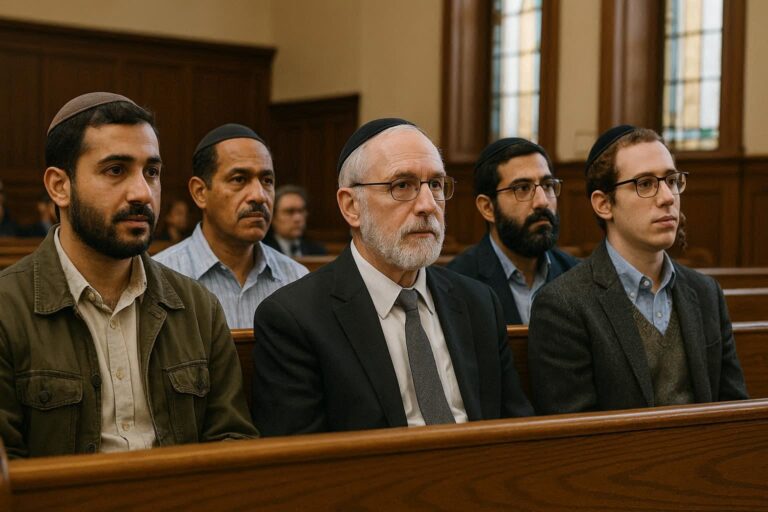
*Rav Avigdor Miller on Bringing the Geulah with Unity* *Q:* How can we in this generation become so perfect enough that we should merit the geulah shleimah? *A:* Now we have to understand that this question – what to do in order to be zocheh to the geulah has been treated in our seforim at length. There are a number of things to do, but one thing is very clear. All the frum Jews have to fulfill one condition, וקבצנו יחד. We have to be together. And Hakodosh Boruch Hu made a miracle today. Sitting here is something unbelievable. Jews from Syria, from Egypt, from Hungary, from Iran all together here. It’s a kibutz goliyus. It never happened before. For generations and generations, separate kehillos, almost no contact with each other. And Hakodosh Boruch Hu said, “No, you have to learn to be together. You have to learn יחד יחד שבטי ישראל.” Although each shevet maintains its individuality, Hashem didn’t say Reuven should stop being Reuven. No, Reuven is still Reuven, Shimon is still Shimon, but still they should all be yachad. So the Sefardim of Syria should pray with their siddur, Sefardi of Teiman should keep their siddur, the Hungarian Jews should daven their nusach, everybody should keep his nusach, but they should feel yachad. In their heart, they should feel achdus. That’s a very important obligation because someday we’ll be together in Eretz Yisroel and you’ll have to be together there. You’ll have no choice. So you might as well practice up now on the middah of yachad. That’s one of the ways of making a hachanah for the kibbutz goliyus. (September 1996) *Click below to join the Official Toras Avigdor WhatsApp Group:* http://tiny.cc/TAenglish5

*Rav Avigdor Miller on the Benefit of Earthquakes* *Q:* What’s the benefit of earthquakes? *A:* I’ll ask a question. If you had eaten a big meal and it generated a lot of gas, so sometimes when you’re polite company, you feel that you’re bursting. You have to go someplace where you can relieve the pressure. Now what’s the benefit of that? The earth, you have to know, is building up pressure. And it must be relieved. An earthquake is going to save us from a bigger catastrophe that’s lying in store. And therefore, the pressure is relieved along a certain line. And in that line, a little havoc is caused, or maybe relatively small havoc, but it’s nothing compared to what would happen if there was no vent. So therefore, an earthquake really is a lifesaver for the earth. Because what’s doing underneath the surface, tremendous pressures are being built up. There’s tremendous heat being built up. There’s friction of the strata one upon the other. And that friction causes heat. And the heat causes the water to volatilize. Water becomes steam. And it makes a vast pressure underground. And there has to be movement someplace in order for a release of this energy. Actually, earthquakes do cause beneficial effects too, in addition. The movement of the earth’s surface causes certain adjustments in the surface that are beneficial. (October 1977) *Click below to join the Official Toras Avigdor WhatsApp Group:* http://tiny.cc/TAenglish5
*Toras Avigdor Weekly Shabbos booklet* 👇👇👇
*Toras Avigdor Weekly Junior Booklet – Double Parashah: Two Junior booklets*

*Rav Avigdor Miller on the Surprise of Moshiach* *Q:* What is meant by מצמיח ישועה? *A:* It says צמח דוד עבדך – the sprout. Tzemach means something that comes out of the earth suddenly. The time will come when Moshiach will come. It was described as follows: Rabbi Chaim Brisker said, I’ll be sitting in my house and looking in the Gemara. His wife would say, “Chaim, there’s a noise outside.” So he'll say, “Go out and see what it’s all about.” She goes out in the street, she says, “Chaim, you know what they’re saying? Moshiach is coming.” He said, “Please,” he'll say, “don’t bother me now. Don’t waste my time.” She walks out again, “Chaim!” she says, “Moshiach is coming, they’re saying.” He said, “Please,” he'll say, “rebbetzin, don’t bother me. I have to learn.” And she comes in again, she says, “Chaim! Everybody is saying Moshiach is here.” He puts on his kapote and goes out to meet Moshiach. That’s how it’s going to be. It’ll be a surprise. You’ll be surprised. מהרה תצמיח – it’ll sprout out. So that’s why אחכה לו בכל יום שיבוא. Every day I’m waiting for him. Now the emunah in Moshiach has to be built on this idea that we’re every day getting ready for him because it’s going to be a surprise. It won’t be announced a month beforehand and you’ll have ways and times to prepare, you better get ready now because people who are not ready might be rejected. Moshiach will take them all together and say, “Let’s go.” They’ll have great airplanes, on kanfei nesharim, they’ll fly in great, huge airplanes to Eretz Yisroel all together. So be ready for it. Every day, אחכה לו – I’m going to wait for him, שיבוא, and the element of surprise that’s going to be in bias haMoshiach. (October 15, 1998) *Click below to join the Official Toras Avigdor WhatsApp Group:* http://tiny.cc/TAenglish5
*Why aren't Goyim told about Olam Haba? In order they should be able to improve their ways? That's your question?* And the answer is they know so much about it that they're telling us to improve our ways, that we should get Olam Haba like they get. Don't you know that? The Goyim are specialists on Olam Haba, because they don't have Olam Hazeh. If you look at it — of course you wouldn't look — but in the New Testament, it's all Olam Haba business. He promises anybody who signs up and believes in him, he promises mansions in the sky, right off, without too much work. It's one of the principles of Christianity. You don't have to work hard. All you have to do is believe in me, he says. And there are famous theologians who have explained it quite clearly. He said even if you're the worst murderer, rapist, and so on, but finally you accepted Oso Ha'ish, you accepted that man, then you have to know that unconditionally you are going to gain the kingdom of heaven. And it's only the Jews who are losing out. The fact is, the Goyim are such big experts on Olam Haba that they state clearly that all the tzaddikim from Adam on, including Avraham and Moshe, went to Gehinnom! And they were in Gehinnom and suffering tortures all these years, until finally Oso Ha'ish came in his great kindness, and he redeemed them from Gehinnom. So, to tell them about Olam Haba is superfluous; they know all about it already. (February 1977) *Rav Miller on the Parsha* _The following Dvar Torah is taken from "Journey into Greatness"_ הן־עם כלביא יקום וכארי יתנשא (בלק כג:כד) BEHOLD A PEOPLE THAT RISES UP LIKE A LIONESS, AND AS A LION HE LIFTS HIMSELF UP. (Balak 23:24) These words, it is true, were said as a preface to the following words: "He shall not lie down until he eats the prey". But they also declare the stubborn nature of Israel, that they shall forever persist in the fulfillment of their loyal obligation to Hashem (see 24:9 below). In the Talmud (Brachos 12B) these words are considered as a parallel to Hashem's commandment to recite the Shema "when you lie down and when you arise" (Darim 6:7); and this parallel suggested that Bileam's glorious prophecy ought to be recited twice daily, if not for the fact that this duty would be too onerous for a nation already obligated to recite the Shema (and the daily prayers) (Brachos, ibid.). The loyal Torah-nation rises up vigorously to serve Hashem, and they allow no one to prevent them; and when they crouch to guard the commandments, no one is able to prevail upon them to forsake their loyalty. *Click below to join the Official Toras Avigdor WhatsApp Group.* http://tiny.cc/TAenglish5
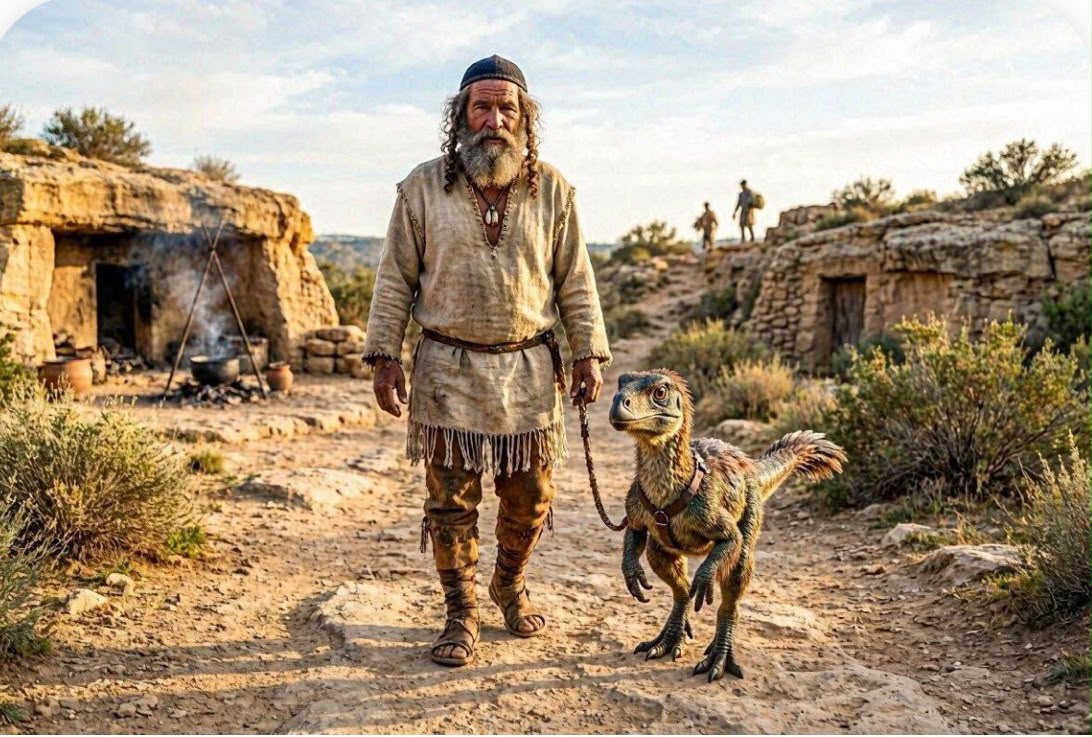
*Rav Avigdor Miller on Cavemen and Dinosaurs* *Q:* How does the age of the cavemen and the dinosaurs fit in with Torah? *A:* And the answer is, how does the age of the computers fit in with the Torah? Any contradiction? No. Same is just like computers are contemporary with us, so were cavemen contemporary with dinosaurs. Only that today we are contemporary with computers, and yesterday people were contemporary with dinosaurs. The dinosaurs are quite recent. And the fact is, if you want to spend money you can buy a film strip, you can rent it too if you want - I’ll give you the address where it can be procured - and you’ll see there photographed footsteps, it's fossilized footsteps, where you see a dinosaur waddling. Its footsteps are imprinted forever on a rock, and together with his footsteps are footsteps of a man. Human footsteps! Which means that the dinosaur was contemporary with man. Now that doesn’t fit according to the timetables of the evolutionists, but it’s proven, so what can you do?! Now, the cavemen? There’s no problem there at all. Cavemen, that's a silly thing. Because there are cavemen even today. In North Africa, even fifty years ago, when Nochum Sloush was traveling in North Africa, he found Jews living in caves in parts of North Africa. There was a place in the mountains where caves were available and didn’t cost any rent. So hundreds and hundreds of Jews lived in caves. What does that mean, what does that prove? They're putting on tefillin in the caves and eating matzah on Pesach in the caves and saying Bereishis barah Elokim in the caves as well. So a caveman means nothing. Now dinosaurs, that's what puts a thrill in little boys who are taught evolution. And therefore you have to know, dinosaurs are just the same as caveman. Because dinosaurs are a recent phenomenon. They went out of existence as soon as the Mabul took place. A great many of the huge lizards of antiquity that were not able to survive the flood, they were all destroyed in massive catastrophes. And that's proven by the fact that you find dinosaur graveyards. Huge masses of dinosaur bones are jammed together in certain places as if they were buried together. And that could only be due to catastrophe. They didn't come and decide to bury themselves together. It's not like a Montefiore Cemetery where every person applies for a grave. No! It was a catastrophe that swept them up suddenly. When the Mabul came there were great changes in the weather suddenly. Tremendous changes took place. When so much water is subtracted from the sea's surface, there's a tremendous change in the climate. And in certain places the dinosaurs were immediately overwhelmed. They were frozen. You find thousands of mastodon skeletons in Siberia. In great cemeteries, great graveyards all buried together. Because there was a big catastrophe that engulfed them suddenly. And therefore the dinosaurs and the cavemen and whatever else you have are no contradiction to anything that we teach in the Torah. (January 1984) *Click below to join the Official Toras Avigdor WhatsApp Group.* http://tiny.cc/TAenglish5

*Rav Avigdor Miller on Pirkei Avos and Dale Carnegie* *Q:* Would you recommend a Dale Carnegie course? *A:* Would I recommend a course that teaches the Dale Carnegie system for dealing with people and for successful living? I don’t recommend anything that’s not in Torah. If you want to know what I recommend, I would recommend a Pirkei Avos course. However, this I’m going to tell you. That it’s a great pity that people are not in the frame of mind to appreciate Pirkei Avos. Some people, after reading Dale Carnegie are stirred to the recognition that all this is found someplace else and even better. And they discover that Pirkei Avos was saying it all the time. So it could be if it’s necessary to make such a roundabout course to come back home again, maybe it’s worthwhile. But there’s no question that Pirkei Avos is the course to take. If you’ll take one statement of Pirkei Avos; I’ll choose one at random. חָכָם אֵינוֹ מְדַבֵּר בִּפְנֵי מִי שֶׁהוּא גָדוֹל מִמֶּנּוּ – A wise man doesn’t open his mouth in the presence of somebody who is bigger than him. Now just take those words and think them to their logical consequence. It means you have to keep your mouth shut all your life. Do you know why? Because you’re speaking in the presence of Somebody who is bigger than you are. Much bigger. It says that in Koheles. In Koheles it says, “Don’t be in a hurry to talk, כי אלקים בשמים ואתה על הארץ – because Hashem is in the heaven.” So if you’ll study that properly, you’re going to learn to keep your mouth closed. It’s a great thing if people learn how to understand maamarei Chazal and how to apply them. And you wouldn’t need anything that the umos ha’olam have. They have nothing that we don’t have a thousand times better. (August 1982) *Click below to join the Official Toras Avigdor WhatsApp Group.* http://tiny.cc/TAenglish5

*Rav Avigdor Miller on Opening the Mechitzah* *Q:* When this lecture goes on, so the curtain on the top half of the ezras noshim is opened up. Is that al pi hahalacha? *A:* And the answer is that according to my pshat it is. It could be somebody will say no but according to my pshat it is. Because we have a mechitzah ten tefachim high, so that’s a purpose of the mechitzah, there shouldn’t be any mixing. Fine. They’re seated separately, we are seated separately. We have a mechitza between us, even when the curtain is open. Only that when it comes to davenen, so some people turn around during davening, sometimes they face the other direction at davenen, so the curtain is closed up. So the mechitzah, as a technicality of ten tefachim high that we always have. It’s ten tefachim high; more than ten tefachim high. It’s a separation. But the other technicality, not to be able to look, we don’t look because we are all facing me. During the lecture you are all facing me. If you do turn around and look, it’s none of your business. Who told you to turn around and look? (July 23, 1998) *Click below to join the Official Toras Avigdor WhatsApp Group:* http://tiny.cc/TAenglish5
*Rav Avigdor Miller on Tefillah and Korbanos* *Q:* What’s the pshat that tefillah is instead of korbanos? *A:* The truth is tefillah and korbanos always were simultaneous. At the same time there were korbanos, there was tefillah too. It’s only when you had no more korbanos, so we considered tefillah as a substitute, but not because tefillah was made instead of korbanos. No. For instance, tefillas shachris, you say, is like an analogy to korban Tomid shel shachar. But it wasn’t made instead of the korban Tomid. They davened tefillas shachris even in the Beis Hamikdosh. They davened tefillas mussaf even in the Beis Hamikdosh. It wasn’t made after the churban. So it’s not instead. So we davened always, even when there were korbanos. When the korbanos were no longer in existence, so all we have is left is the tefillos. So we have to use the tefillos instead of the korbanos. That’s the best we can do. (July 23, 1998) *Click below to join the Official Toras Avigdor WhatsApp Group:* http://tiny.cc/TAenglish5
Dear Friend, Toras Avigdor is about much more than booklets and shiurim. It's about people. We're looking to speak with members of the Toras Avigdor family whose lives have been touched by Rav Miller's Torah. Perhaps you learn the booklet regularly, teach Toras Avigdor to others, distribute booklets in your community, or have a story of how these ideas have impacted your life. Many people are reluctant to share because they don't feel their story is noteworthy. But by taking a few minutes to speak with us, you're helping us tell the story of Toras Avigdor and the impact Rav Miller's teachings continue to have around the world. If you'd be willing to participate in a brief interview, simply reply to this text, or email us at info@torasavigdor.org Thank you for helping us share the story.
*Toras Avigdor Weekly Shabbos booklet* 👇👇👇
*Toras Avigdor Weekly Shabbos booklet - Junior Edition* 👇👇👇

*Rav Avigdor Miller on Shiva Assar B'Tamuz* *Q:* What is Shiva Assar b’Tammuz supposed to teach us? *A:* Shiva Assar b’Tammuz comes to teach a number of things. One of the things is, we have to look back על כל מחמדנו שהיה לנו בימי קדם all the wonderful things we had in the days of old but we didn’t appreciate them as long as we had them. That’s a universal failing in human beings. They don’t appreciate fully what they have. I'm sure they appreciate it to some extent but the glory of a Jewish nation that lived together in Eretz Yisroel and Bavel—at one time only in Eretz Yisroel—that was something that was unequal. Imagine the days of Bayis Rishon. Not one Jew lived anywhere except in Eretz Yisroel and they were so proud of their superiority. Yes, there were people, here and there, who were attracted to the foolishness of the goyim around but the vast majority of the Jews were loyal to everything. Even the ovdei avodah zarah were frum Jews. Even Achav who was a real oveid avodah zarah, he was a frum Jew; he had a kosher kitchen, and when the Navi told him some criticism he put on sackcloth and ashes and he fasted. So once upon a time we had tremendous gifts that we didn’t appreciate sufficiently. And so among the purposes of this period of time now that we’re going to start Shiva Assar b’Tammuz is to look back and realize what we once had. Of course it makes us sad that we don’t have them today but it’s important to realize that we still owe gratitude to Hashem for what He gave us in the days of old. Once upon a time we had a kingdom; a Jewish frum police force, shoftim v’shotrim. Even a policeman could be a tzaddik gomur. He wore tzitzis and he was defending the Torah laws. That’s why he was called a שוטר, because he had a stick, a שוט in his hand. Once upon a time anybody who did a small chillul Shabbos was put to death. And so here was never such a nation that was so devoted in their happiness, in their observance But what happened? When they were all together, they began thinking, “Maybe outside there's also something good.” They didn’t realize the big difference between the outside and the inside. השמרו לכם פן יפתה לבבכם – Be on guard not to be persuaded that it’s better outside. ולא תתורו – You shouldn’t look; you shouldn’t spy to see what's doing in other nations, maybe there’s something there too. And that’s what happened in Europe when the people began thinking, “Maybe it’s better to live among the Germans; the Germans are civilized.” And it seemed so. You couldn’t insult a Jew on the street in Germany. In Austria you could insult a Jew in the street. You know that Zigmund Freud tells a story about his father. His father was walking in the street and he bought a new hat, a new fur hat, so a gentile passed by and knocked it off. He said, “Jew get off the sidewalk.” But in Germany they were polite. I was in Germany for one day — it was polite in those days. So the Jews said, “Surely, ah! That’s culture, that’s science!” And that’s why so many Jews got lost in Germany So Hakodosh Boruch Hu said, “I'm going to show you who Germany is.” That’s why the greatest wickedness the world ever saw came out of Germany in order to teach a lesson. But in the days of old when they all lived inside of their own mechitzah they couldn’t realize what the outside world was and they couldn’t fully appreciate the great benefit that Hashem had given them of מחמדינו שהיה לנו מימי קדם. And therefore, that’s one of the purposes of fasting – we remind ourselves and we’re so sorry that once upon a time we failed to understand how happy we should have been. We failed to realize it. Another purpose of course is to say, “What can we do to bring back those days?” Now, you can’t bring it back by yourself but still every person is obliged to try, to at least make an effort. So therefore, the taanis tzibur is for the purpose of making at least one step in the right direction. It’s not merely to afflict yourself, not to eat. The taanis is for the purpose o
*Rav Avigdor Miller on Compartments in the Mind* *Q:* Is it right to serve Hashem b’simcha when other people are suffering tzaros? *A:* A man must have the ability to departmentalize his mind. I’ll give you an example. Just recently we had Tisha B’Av. We sat on the ground and we wept for the destruction of the Beis Hamikdash. We wept al beis Yisroel v’al am Hashem shenaflu b’charev. Soon after that came Chamisha Asar B’Av and we didn’t say tachanun. לא היה ימים טובים לישראל כחמשה עשר באב – There were no happier days for the Am Yisroel than the 15th of Av. And they come one after the other; so soon that it seems to us like there is no time in between! The answer is, that’s our job in life. We don’t have any emotions of our own. We feel with the emotions of the Torah. Eis lakol! There’s a time for everything. There’s a time to mourn and a time to rejoice. And therefore when we think of other peoples’ misfortunes we should sympathize with them, no question. But it doesn’t mean that when you have some good fortune in life that you shouldn’t appreciate it. Hakodosh Boruch Hu doesn’t want you to overlook the happiness He’s giving you. Hakodosh Boruch Hu wants you to appreciate it and enjoy it fully! And as a result you’ll serve Him with a full heart. You’ll be grateful in thanking Him. And therefore we have to have a mind that’s capable of both. Even at the time that you are rejoicing, if you’ll remind yourself of your fellow man’s misfortunes, you’ll feel for him. But that won’t stop you from dancing at your daughter’s wedding. And therefore even the person who is mourning for the churban beis Hamikdash and for the multitudes who perished by persecution, nevertheless even then he shouldn’t lose sight of the fact that Hakodosh Boruch Hu gave him garments. He makes the bracha malbish arumim even on Tisha B’Av. He makes a bracha for a belt, ozer Yisroel b’gevura, even on Tisha B’Av. He makes a bracha on the ability to walk even on Tisha B’Av. All the benefits that we enjoy in life we still enjoy on Tisha B’Av. So you see that even on the same day that you’re sitting and mourning, even on that same day you’re cognizant of the happiness that Hashem gives you. You can’t make a bracha for nothing! It means you are happy with these things. Only that you demonstrate sadness on that day. On another day, on Chamisha Asar B’Av, on Simchas Torah, you demonstrate joy. But always both qualities must be in the mind. And that’s how a Jew must be. A Jew cannot be just one thing. If you’re just one thing then you’re a cripple. If you’re one thing, you lost your free will. A man who is alive has free will and he chooses constantly between this attitude and that attitude. And all the attitudes are true. (August 1986) *Click below to join the Official Toras Avigdor WhatsApp Group:* http://tiny.cc/TAenglish5
*In honor of the 15th of AV* Midsummer Happiness - booklet on 15th of Av *A Torah Guide to the Summer*